
Solar Street Light Guide
How to Choose Solar Street Light for Road Projects
Choosing the right solar street light for road projects is not only about selecting a wattage. Project buyers should consider road width, pole height, lighting layout, battery capacity, solar panel configuration, working time, local sunlight conditions and installation environment.
Quick Answer
Quick Answer
For most road lighting projects, the right solar street light should be selected according to road width, pole height, required brightness, working time, local sunlight conditions and project budget. For rural roads and community roads, all-in-one solar street lights are often practical. For wider roads or long working time requirements, higher power or split solar street light solutions may be more suitable.
Project Basics
Why Road Project Requirements Matter
A solar street light for road projects must match the real project environment. A product that works well for a narrow rural road may not be suitable for a wider main road, a logistics yard or an industrial access road. Road lighting project decisions should consider the road width, installation distance, target brightness, pole height, local climate and expected operating time.
Many buyers start solar street light selection by asking for a power rating. That is only one part of the decision. The same wattage can perform differently depending on LED efficiency, lens design, mounting height, solar panel size, battery capacity and control mode. For B2B project use, product parameters should be reviewed together with site conditions and installation planning.
ZANNOE recommends using the guide below as a practical starting point before contacting suppliers. Buyers can also review related Outdoor Lighting Solutions and Outdoor Lighting Resources to prepare project information more clearly.
Selection Factors
Key Factors When Choosing Solar Street Lights for Road Projects
Road Width
Wider roads usually require higher brightness, suitable light distribution and a more careful pole layout. Road width is one of the first details to confirm before model selection.
Pole Height
Solar street light pole height affects lighting coverage, brightness distribution and product power selection. A higher pole may need stronger light output and better optical control.
Working Time
Project buyers should confirm how many hours of lighting are required each night. Some projects need lighting during peak hours, while others need all-night operation.
Solar Panel and Battery Capacity
Solar panel and battery capacity should match local sunlight and required working time. Low sunlight areas or long operating hours need more careful energy configuration.
Waterproof and Outdoor Protection
Outdoor road lighting should consider waterproof grade, dust protection and long-term exposure. The installation environment may include rain, heat, wind, dust and seasonal changes.
Project Budget and Maintenance
Project selection should not focus only on the lowest initial cost. Stable performance, maintenance access, installation efficiency and project life cycle should also be considered.
Reference Table
Solar Street Light Selection Reference for Road Projects
| Road Type | Typical Requirement | Recommended Product Type | Key Selection Factors |
|---|---|---|---|
| Rural Road | Basic road lighting with limited grid access | All-in-One Solar Street Light | Pole height, working time, battery capacity, installation convenience |
| Community Road | Safe and reliable lighting for residential or public areas | All-in-One Solar Street Light | Brightness, design style, working mode, installation layout |
| Industrial Road | Higher brightness for logistics and industrial traffic | High-Power Solar Street Light or Split Solar Street Light | Power, battery capacity, pole height, working time |
| Main Road | Wider lighting coverage and stable performance | High-Power Solar Street Light | Road width, pole distance, luminous efficiency, solar panel size |
| Remote Road | Off-grid lighting where cable work is difficult | Solar Street Light System | Sunlight condition, battery capacity, autonomy days, maintenance access |
Power and Pole Height
How to Choose Power and Pole Height
Power and pole height should be considered together. A low pole on a narrow road may not require the same output as a higher pole on a wider road. The final choice usually depends on project conditions such as road width, pole distance, target brightness and whether the road is used by pedestrians, vehicles or industrial traffic.
For solar street light pole height, buyers should avoid choosing only from a product catalog. The supplier needs to understand the project layout before recommending a suitable configuration. Installation distance and local site conditions can also affect whether an all-in-one design or a split solar street light system is more practical.
Tip: Before confirming the final wattage, project buyers should provide road width, pole height, installation distance, quantity and required working time for supplier evaluation.
Product Type
All-in-One or Split Solar Street Light for Road Projects?
All-in-one solar street lights integrate the solar panel, LED module, battery and control system into a compact structure. They are often practical for community roads, rural roads, parking areas and general outdoor road lighting projects where installation convenience matters.
Split solar street lights allow more flexible placement of the solar panel and battery system. This can be useful for larger projects, special installation environments or longer working time requirements. The right option depends on project scale, sunlight conditions, maintenance access and the required operating mode.
For a deeper review of product structure differences, see the future resource article All-in-One vs Split Solar Street Light.
Avoid Selection Errors
Common Mistakes When Choosing Solar Street Lights
Choosing only by wattage
Wattage does not show the full lighting performance. LED efficiency, lens distribution, battery capacity and installation height all affect the final project result.
Ignoring local sunlight conditions
Solar charging depends on local sunlight. Projects in rainy seasons, shaded areas or low-sunlight regions need more careful solar panel and battery planning.
Not confirming working time
Solar street light working time should be defined before quotation. Peak-hour lighting and all-night lighting may require different configurations.
Using low battery capacity for long lighting hours
Long lighting hours require suitable battery capacity. A low-capacity battery can reduce reliability during cloudy or rainy days.
Not checking installation layout before quotation
Road width, pole distance and installation direction should be checked early. Without layout information, model selection may be inaccurate.
Quotation Preparation
What Information Should You Provide Before Requesting a Quotation?
Providing clear project information helps ZANNOE recommend suitable solar street light models and prepare a more accurate project quotation. Before contacting a supplier, project buyers can prepare the following details:
- Project location
- Road width
- Pole height
- Installation distance
- Quantity
- Required working time
- Target brightness
- Project budget
- Tender or document requirements
- Photos or drawings if available
These details help the supplier review solar street light battery capacity, solar panel configuration, working mode and installation suitability before recommending a model.
Product Direction
Recommended ZANNOE Solar Street Light Options
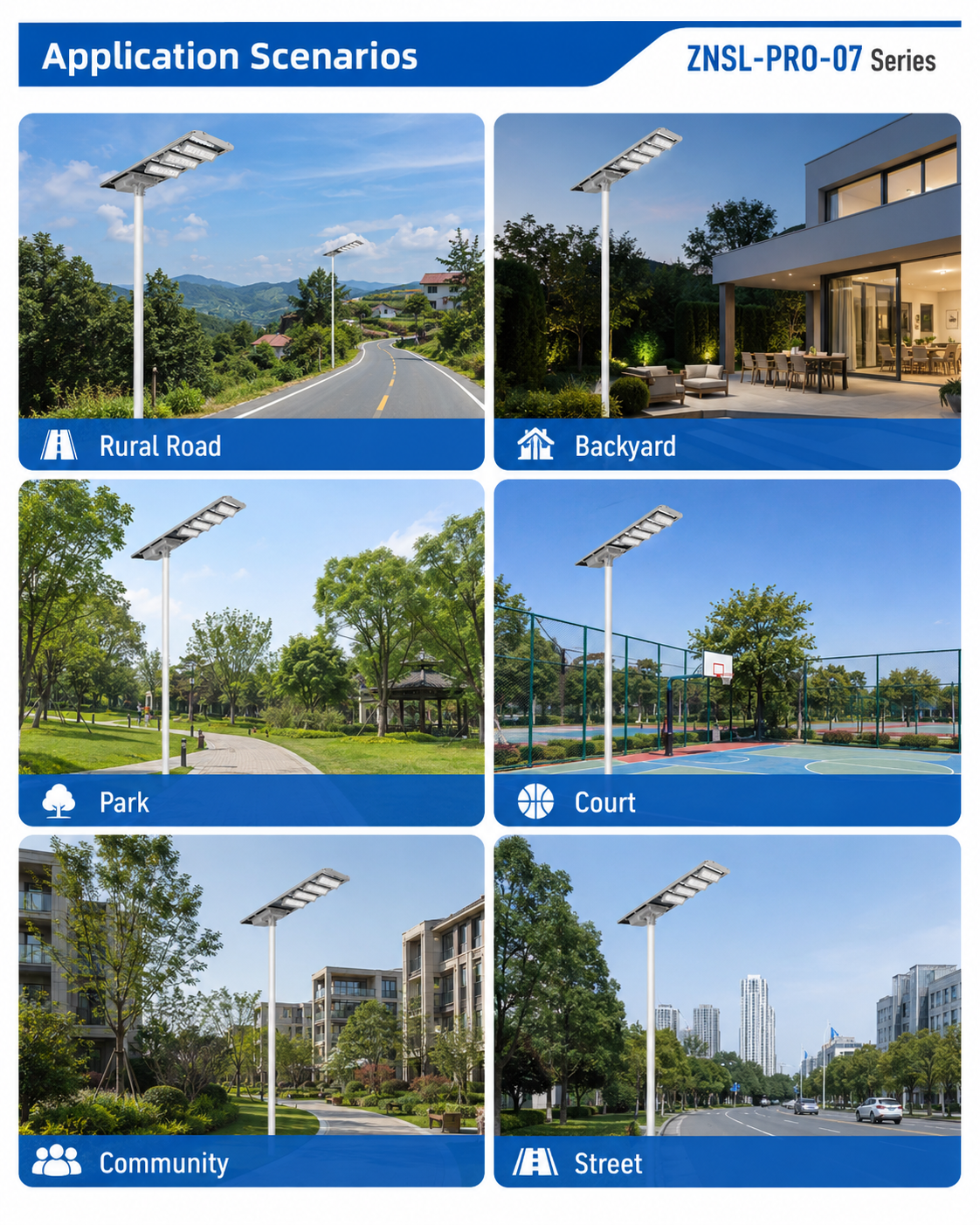
ZNSL-PRO-07 All-in-One Solar Street Light
Suitable for road lighting, rural roads, community roads, parking areas and outdoor project lighting.
Contact for Model RecommendationZNSL-AIO-05 Economic All-in-One Solar Street Light
Suitable for cost-sensitive solar lighting projects, rural roads, courtyards, parks and general outdoor applications.
Contact for Model RecommendationZNSL-AIO-08 Split Solar Street Light
Suitable for projects requiring flexible solar panel and lamp installation, including outdoor road projects, parking lots and industrial areas.
Contact for Model RecommendationFAQ
FAQ About Choosing Solar Street Lights for Road Projects
How do I choose the right solar street light for a road project?
Start with the project environment, not only the wattage. Road width, pole height, installation distance, target brightness, local sunlight and required working time should be reviewed together before selecting a solar street light.
What information is needed before quotation?
Useful information includes project location, road width, pole height, installation distance, quantity, required working time and target brightness. Site photos or drawings can help the supplier evaluate the project more accurately.
How important is pole height for solar street light selection?
Pole height affects light coverage, brightness distribution and suitable power range. A higher pole may require stronger light output and suitable optical design to maintain road visibility.
Should I choose all-in-one or split solar street lights?
All-in-one models are often practical for easy installation and general road applications. Split solar street lights may be more suitable when the project needs flexible solar panel placement, larger energy storage or longer working time.
What affects the working time of solar street lights?
Working time depends on battery capacity, solar panel charging, local sunlight, LED power, dimming mode and weather conditions. For project use, working time should be confirmed before final model selection.
Can ZANNOE recommend models for my project?
Yes. Send your road width, pole height, installation distance, quantity and working time requirement. ZANNOE can review the project details and recommend suitable solar street light options for further discussion.
Need Help Choosing Solar Street Lights for Your Road Project?
If you are planning a road lighting project, send us your road width, pole height, quantity, working time requirement and project location. ZANNOE can help review your project requirements and recommend suitable solar street light options.